The Art of Sport x World Cup 2026 Collection: 48 Posters for the Beautiful Game
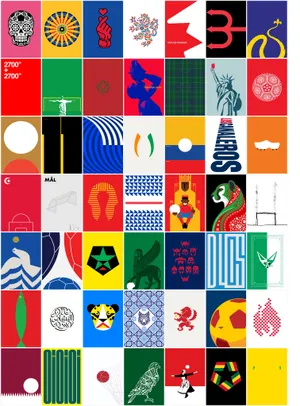
We’ve designed 48 original posters celebrating the culture, identity and stories of every nation competing at the FIFA World Cup 2026.
48 Posters for the Beautiful Game
As the FIFA World Cup 2026 kicks off, we are excited to share the complete Art of Sport x World Cup 2026 Posters Collection.
What began over a decade ago as a passion project by Rob Duncan, Partner and Creative Director at Mucho, and JP Stallard, capturing the spirit of football through bold, minimalist posters, has returned for the biggest-ever FIFA World Cup.
Over the past 48 days, we have been counting down to the tournament by releasing a new poster every day across our social channels. Each design captures something unique about a nation — sometimes iconic, sometimes unexpected, occasionally mischievous, but always designed to raise a smile. Together, they tell 48 different stories inspired by the symbols, traditions and cultural quirks that make each country instantly recognisable.
After all, football has always been a game of contrasts. Different countries. Different histories. Different colours. Different songs. Different ways of playing. Without those differences, there is no competition, no identity and no passion. Yet every four years, those differences become part of something bigger: a shared global ritual.
Difference is what makes the game possible. And a shared passion is what makes it universal.
Now let the Beautiful Game begin. Could you guess the country behind every poster?
Find your nation. Share it with fellow fans around the world. And celebrate the game that brings us together.
Thanks to all the designers who contributed in this project: Rob Duncan, JP Stallard, Pablo Juncadella, Marc Català, Tilman Solé, Lia Araujo, Bruno Carreras, Barry Flynn, Paul Garbett, Islam Al Hamden, Peter Horridge, Jeremy Matthews, Matthew Mehi, Quirze Perez, Joan Picanyol, Will Rogers, Laura Ubach, Robert Williams, Nico Wolfl.
All posters are now available to purchase at Plotnet Prints.
GROUP A
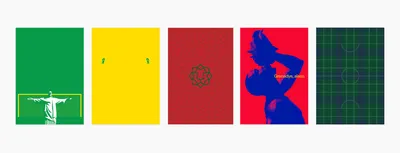
Mexico
Forever Football
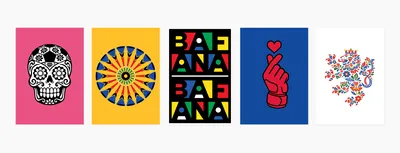
The Aztecs played a ritual sport known as the Mesoamerican ballgame, which was far more than just a game. It was a sacred ritual tied to the movement of the sun. In some ceremonies, the outcome carried real stakes, human sacrifice, even beheading, symbolizing the balance between life, death, and the cosmos.
South Africa (I)
Hear us Play
The Vuvuzela became the unmistakable sound of the 2010 FIFA World Cup, turning stadiums into a constant, buzzing roar. Loved by fans and loathed by some players, its deafening drone became a symbol of South African football culture, and one of the most iconic soundtracks in World Cup history.
South Africa (II)
Bafana Bafana
South Africa’s national football team are known as “Bafana Bafana,” meaning “The Boys” in Zulu, a name that reflects the team’s unity, energy, and spirit on the pitch.
Republic of Korea
K-pop, Kick-off
The Republic of Korea’s national football team made history at the 2002 FIFA World Cup by becoming the first Asian team to reach the semi-finals. Backed by passionate home support, their run wasn’t just unexpected, it redefined what was possible for Asian football on the world stage.
Czechia
Crowned Lion
Czech Republic’s national football team carry the legacy of Czechoslovakia, who won the 1976 UEFA European Championship with one of football’s most iconic moments, the “Panenka” penalty, a delicate chip down the middle that has been copied ever since.
GROUP B
Canada
Ooh Aah Canada
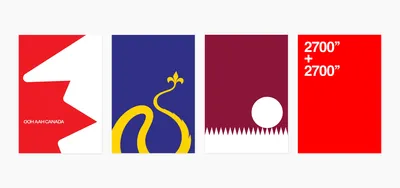
Canada will co-host the FIFA World Cup 2026 alongside the United States and Mexico, the first time the tournament is shared by three nations. For Canada, it marks a defining moment, bringing the world’s biggest game home and signaling its rise on the global stage. This is echoed in their chant “Ooh ahh Canada,” the voice of belief and pride behind the team.
Bosnia and Herzegovina
Rise of the Golden Dragon
Bosnia Herzegovin’s national football team are nicknamed the “Dragons,” a symbol of strength and resilience drawn from medieval Bosnian history. The name reflects a nation that, despite a short footballing history, has risen fiercely to earn its place on the world stage.
Qatar
A Nation Sharply Defined
Qatar’s national football team made history at the 2022 FIFA World Cup by becoming the first Middle Eastern nation to host the tournament. While their results on the pitch were tough, the moment marked a bold new chapter, bringing the game to a new part of the world.
Switzerland
Every Second Counts
Switzerland’s national football team are known for their precision and late-game discipline, famously scoring crucial goals in the final minutes, proving that in Swiss football, every second really does count.
GROUP C
Brazil (I)
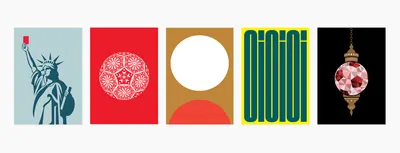
Jesus Saves
(Winners 1958, 1962, 1970, 1994, 2002)
Brazil’s national football team play with a style known as jogo bonito “the beautiful game” a joyful, expressive approach to football that has captivated the world and become part of Brazil’s identity, watched over by the iconic Christ the Redeemer in Rio.
Brazil (II)
The Beautiful Game
(Winners 1958, 1962, 1970, 1994, 2002)
Brazil gave the world the beautiful game, a style born far beyond the stadium. It’s shaped on beaches, in parks, and in neighborhoods where kids grow up playing barefoot, creating their own goals wherever they can. This is where the instinct, creativity, and unmistakable flair of Brazilian football truly come from.
Morocco
Where Lions Play
Morocco’s national football team made history at the 1986 FIFA World Cup by becoming the first African nation to top their group, finishing above England, Poland, and Portugal, and proving African football could compete with the very best.
Haiti
Grenadye, Alaso!
“Grenadye, alaso!” is Haiti’s World Cup rallying cry, meaning ’soldiers, charge!’ The conch shell is a traditional Haitian symbol of resistance. It was used like a horn to rally troops as they charged into battle.
Scotland
The Tartan Army
Scotland are backed by the “Tartan Army,” one of football’s most loyal and colorful fan bases, famous for traveling in huge numbers, turning every away match into a sea of kilts, songs, and unwavering support.
GROUP D
USA
The Referee’s a Wanker!
The United States will co-host the FIFA World Cup 2026 alongside Canada and Mexico. It’s their second time hosting, after the record-breaking 1994 tournament that helped reshape the game’s popularity across the country.
The Statue of Liberty bears the line, “Give me your tired, your poor, your huddled masses yearning to breathe free”, a sentiment that echoes the global spirit of football, and one worth remembering.
Football has a unique power to unite people across borders. Perhaps this World Cup can serve as a reminder of what’s possible when we come together.
Paraguay
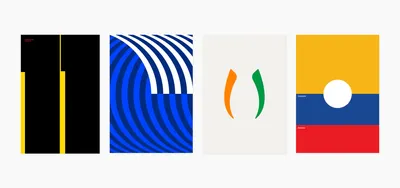
Woven into the Game
Paraguay’s national football team share a cultural symbol with the country’s famed ñandutí lace, an intricate, handwoven craft whose name means “spider’s web” in Guaraní. Like the lace itself, Paraguayan football is built on patience, precision, and beautifully interconnected play.
Australia
Football Country
Australia’s national soccer team has a proud Indigenous history, beginning with John Moriarty in 1960, the first Aboriginal player to represent Australia, marking a powerful connection between the world’s oldest living culture and the global game.
Australia
Aussie, Aussie, Aussie!
Australia’s national football team are driven by the iconic chant “Aussie, Aussie, Aussie – Oi! Oi! Oi!” – a call-and-response that echoes through stadiums worldwide, turning every match into a surge of energy, unity, and unmistakable Australian spirit.
Turkey
Lit by Passion
Turkey’s national football team scored one of the fastest goals in World Cup history. Hakan Şükür found the net after just 11 seconds against South Korea in 2002.
GROUP E
Germany
In the end Germany Win
(Winners 1954, 1974, 1909, 2014)
The German national football team are famous for their relentless late-game mentality, so much so that a saying emerged after the 1990 FIFA World Cup: football is a simple game — 22 players chase a ball for 90 minutes, and in the end, Germany win.
Curaçao
The Blue Wave
Curaçao’s national football team, known as the “Blue Wave,” ride the rhythm of the Caribbean with a fluid, fearless style of play. They stand among the smallest nations ever to reach the world stage, proving that even the smallest waves can make the biggest impact.
Côte d’Ivoire
The Ivory Coast
Côte d’Ivoire’s national football team produced one of football’s most iconic moments when Didier Drogba famously pleaded for peace on live television after qualifying for the 2006 FIFA World Cup. A powerful gesture that helped unite a nation during civil war.
Ecuador
The Balance of Play
Ecuador’s national football team plays many of its home matches in Quito, one of the highest capital cities in the world. Over 2,800 meters above sea level, the thin air gives them a unique home advantage.
GROUP F
Netherlands
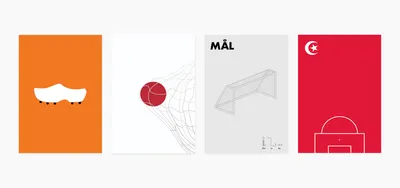
Total Control
The Netherlands national football team have reached the FIFA World Cup Final three times in 1974, 1978, and 2010, but have never won it. This earns them the title of the greatest team never to lift the trophy.
Japan
Rising Star
Japan’s national football team recently made history by beating England 1 – 0 at Wembley, their first ever win over England. This shows their precision and discipline on the world stage just months before the World Cup.
Sweden
Packing the Box
Sweden’s national football team reached the 1958 FIFA World Cup Final on home soil, finishing as runners-up after facing a young Pelé, marking one of the greatest moments in Swedish football history.
Tunisia
Red Territory
Tunisia’s national football team stunned the football world at the 2022 FIFA World Cup by defeating defending champions France. They were still eliminated, becoming one of the few teams ever to beat the champions and not progress.
GROUP G
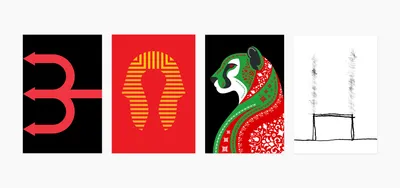
Belgium
The Red Devils
Belgium’s national football team held the number one spot in the FIFA world rankings for a record stretch between 2018 and 2022. An era that defined their “Golden Generation” as one of the strongest in modern football.
Egypt
The Pharaohs
Egypt’s national football team are the most successful team in Africa, winning the Africa Cup of Nations a record seven times. More than any other nation on the continent.
Iran
The Cheetahs
Iran’s national football team, primarily known as Team Melli (“The National Team”), was nicknamed “the Cheetahs” following the inclusion of the endangered Asiatic cheetah on their jerseys during the 2014 World Cup to raise conservation awareness.
New Zealand
The All Whites / Ōmā
New Zealand’s national football team are known as the “All Whites,” a name inspired by their all-white kit. This mirrors the country’s famous “All Blacks” rugby team, but with a football identity of their own.
This poster is dedicated to our dear friend Matthew Arnold of Sons&Co, New Zealand. The idea was conceived over lunch the day after Matt’s funeral in Christchurch by Tim Kelleher, Paul Garbett, Andrew Ashton, Kris Sowersby, and Rob Duncan. It was designed by Paul Garbett. We miss you Matt. We hope this makes you smile.
GROUP H
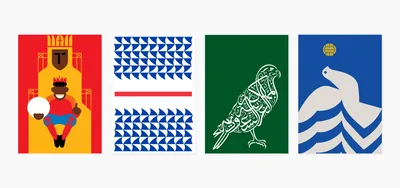
Spain
Spain is B(l)ack
(Winners 2010)
Spain’s national football team dominated world football between 2008 and 2012, winning back-to-back European Championships and the 2010 FIFA World Cup. It was a golden era built on their signature tiki-taka style. They lost it for a while. But now they are back! The poster celebrates Spain’s return to the top through a provocative mix of football, culture and iconic national references.
Cabo Verde
Blue Sharks
Cabo Verde’s national football team are known as the “Blue Sharks,” a nod to the Atlantic waters surrounding the islands. Representing Cabo Verde, they’ve built a reputation for fearless, fast football that punches well above its size.
Saudi Arabia
The Green Falcons
Saudi Arabia produced one of the biggest shocks in World Cup history at the 2022 FIFA World Cup, defeating eventual champions Argentina, ending their long unbeaten run and stunning the football world.
Uruguay
La Celeste
(Winners 1930,1950)
Uruguay won the very first FIFA World Cup in 1930, hosted in Uruguay, setting the foundation for a footballing legacy far greater than the country’s size.
GROUP I
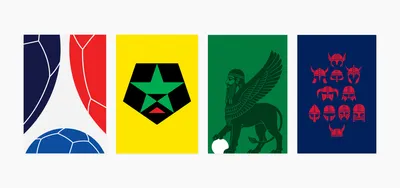
France
Le Tricolore
(Winners 1998, 2018)
France is known for producing generations of world-class talent, but uniquely, many of its greatest players have come from diverse backgrounds, making the team a powerful symbol of modern France both on and off the pitch.
Senegal
Lions of Teranga
Senegal’s national football team made history in 2022 by winning their first-ever Africa Cup of Nations, securing the title on penalties and cementing their place among Africa’s elite.
Iraq
Lions of Mesopatamia
The Iraq national football team achieved one of football’s most remarkable stories by winning the 2007 AFC Asian Cup during a time of conflict in the country, uniting a nation and becoming a symbol of hope far beyond the game.
Norway
A Viking Battle
Norway’s national football team hold a rare distinction in football, they have never lost a match against Brazil, with multiple wins and draws against one of the game’s greatest teams.
GROUP J
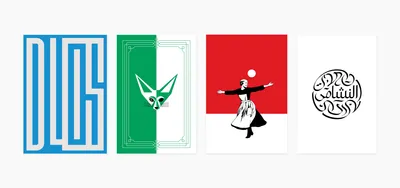
Argentina
Lio Dios
(Winners 1978, 1986, 2022)
The Argentina national football team won the last World Cup Final in 2022. It was a dramatic final, perhaps the greatest ever, securing Lionel Messi’s legacy and ending a 36-year wait for the trophy. The GOAT is here again. Can Messi make it 2 before he retires?
Algeria
Desert Foxes
Algeria’s national football team earned global respect at the 2014 FIFA World Cup by pushing Germany (eventual champions) to extra time in a thrilling Round of 16 match, one of the finest performances by an African team on the world stage.
Austria
The Hills are Alive
Austria’s national football team were one of Europe’s dominant forces in the 1930s, led by the legendary “Wunderteam,” whose fluid, attacking style helped shape the modern game.
Jordan
The Chivalrous Ones
Jordan’s national football team reached their first-ever AFC Asian Cup Final in 2024, an incredible run that marked the greatest achievement in the nation’s football history.
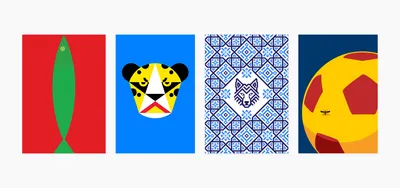
GROUP K
Portugal
Packed with Passion
The Portugal national football team will see Cristiano Ronaldo feature at the FIFA World Cup 2026 at age 41, an extraordinary milestone that would make him one of the oldest outfield players ever to appear on football’s biggest stage.
Democratic Republic of Congo
Spotted Brilliance
The Democratic Republic of Congo reached the semi-finals of the 2023 Africa Cup of Nations, their best run in years, showing a new generation of talent and a resurgence on the continental stage.
Uzbekistan
The White Wolves
Uzbekistan’s national football team made history by qualifying for the FIFA World Cup 2026, their first ever appearance, becoming the first Central Asian nation to reach football’s biggest stage after decades of near misses.
Colombia
Yellow Fever
Colombia’s national football team produced one of football’s most iconic moments when goalkeeper René Higuita performed his famous “scorpion kick” save at Wembley. It was an audacious move that became one of the most unforgettable moments in the game’s history.
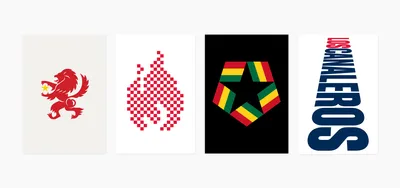
GROUP L
England
It’s Coming Home
(Winners 1966)
England fans have been singing “It’s coming home” since its release by The Lightning Seeds, David Baddiel, and Frank Skinner in 1996. This year marks 60 years of hurt, could 2026 finally be the year it comes home?
Croatia
The Flames
Croatia’s national football team have reached the FIFA World Cup Final twice (2018 and 2022), despite having a population of under 4 million, making them one of the most successful small nations in football history.
Ghana
The Black Stars
Ghana’s national football team came agonizingly close to becoming the first African nation to reach a FIFA World Cup Semi-finals in 2010. They were denied by a last-minute deliberate handball by Luis Suárez. Unfortunately they missed the penalty – one of the most dramatic moments in World Cup history.
Panama
The Canal Men
Panama’s national football team scored their first-ever FIFA World Cup goal in 2018. Despite losing the match, the celebrations were so wild that fans in Panama reportedly partied as if they had won, marking a historic moment for the nation.